
Pod Runner
Noman006Casual
4.354.00 Reviews
- Version
- 1.0.7
- Installs
- 10.00K
- Age Rating
- Everyone
Screenshots
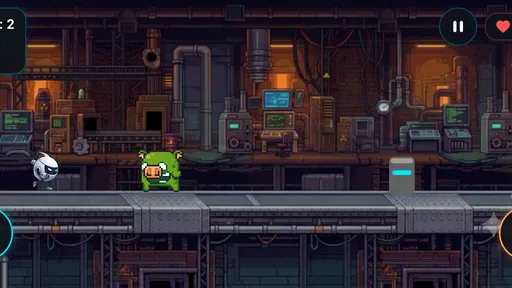
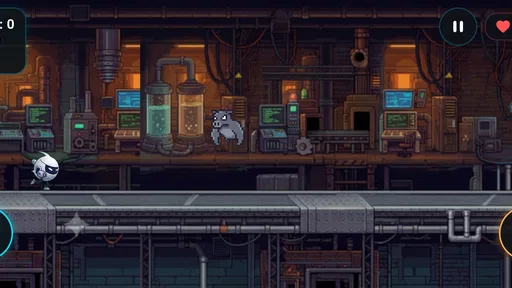
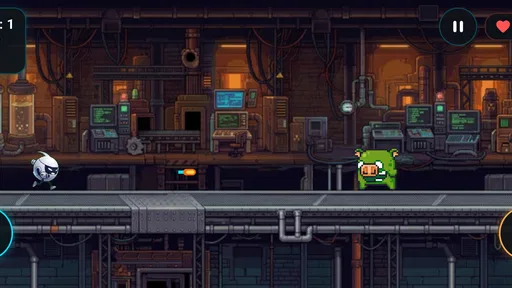
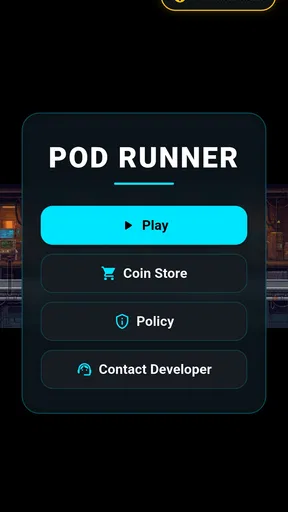
Our Review of Pod Runner
 Analysis by Appyee
Pod Runner is the kind of casual game I reach for when I want a quick test of attention rather than a long, complicated session. Its central idea is easy to understand: guide the pod through danger and avoid obstacles for as long as possible. That simplicity is its strongest quality, but it also sets a clear limit. This is a focused reflex game, not a deep adventure or a content-heavy arcade package.
After spending time with it, my view is straightforward: Pod Runner works best as a short, repeatable concentration break. It is free to download, rated for Everyone, and made by Noman006. The game has a 4.2 average from around 236 ratings, with over 10K installs, so it has already found a modest audience without pretending to be something larger than it is.
What makes Pod Runner enjoyable in short sessions
The appeal comes from the immediate relationship between movement and risk. There is no need to learn a complicated rule set before playing. I can open the game, understand the objective quickly, and begin making decisions almost at once. That makes it a natural fit for a spare minute while waiting for transport, taking a break from work, or looking for something light before bed.
The obstacle-dodging format also gives each attempt a clear rhythm. I am not managing several systems at once; I am watching the path, anticipating the next threat, and trying to react without panicking. That narrow focus is useful because it makes improvement feel personal. When I last longer, I can connect the result to better timing and concentration rather than to a complicated upgrade path.
One practical strength is how little commitment the game asks from the player. A casual game can become tiring when it fills the screen with menus, missions, currencies, and instructions. Pod Runner’s basic concept points in the opposite direction. It is easier to treat as a small mental exercise than as a hobby that demands daily attention.
I also like the way this type of game rewards controlled reactions instead of constant movement. New players often make the mistake of responding to every obstacle with a large, hurried gesture. A better approach is to watch the available space first, then make the smallest correction that keeps the pod safe. That habit is one of the more useful lessons I took from playing: patience can be more valuable than speed.
Another tip is to use the first moments of a run as a calibration period. Rather than immediately chasing a personal best, I pay attention to the pace of incoming obstacles and the amount of room available for correction. This reduces the tendency to overreact later. It is a small change in mindset, but it makes short attempts feel more deliberate and less random.
A simple game with a surprisingly clear learning curve
Because the premise is so direct, the game’s learning curve is easy to recognize. At first, I focus mostly on individual obstacles. With more practice, I start reading the route ahead and preparing for the next decision before the current one is finished. That shift—from reacting to planning—is where the game becomes more satisfying.
This is also why the title can appeal to people who normally avoid complex games. You do not need genre knowledge, a large time investment, or familiarity with a fictional universe. The challenge comes from execution. For a player who enjoys improving through repeated attempts, that can be enough to keep the game interesting.
There is a useful everyday scenario here. If I have five minutes between tasks, I can play one or two attempts without needing to remember a storyline or rebuild a strategy from a previous session. If I am mentally tired, the game gives me something active to do without requiring the kind of sustained attention demanded by a strategy game or role-playing game.
That convenience does not mean every session feels equally rewarding. Reflex games depend heavily on the player’s mood. When I want a calm activity, repeated obstacle avoidance can feel demanding rather than relaxing. When I want a quick challenge, the same pressure becomes the reason to keep trying.
Where the experience feels less convincing
The biggest limitation is also the most obvious one: a simple dodging game can run out of novelty for players who need variety. If your ideal casual title includes puzzles, story scenes, collection systems, or several distinct modes, Pod Runner may feel too narrow. Its appeal depends on whether repeating the central action remains enjoyable for you.
I would also be cautious about expecting a large, constantly changing experience from a game positioned around one straightforward idea. The satisfaction is likely to come from personal improvement and quick replay value, not from discovering a broad world. That distinction matters before downloading it. Someone looking for a substantial game to occupy long evening sessions may be happier with a more layered arcade or action title.
The free price makes trying it easy, but the game includes in-app purchases ranging from $0.51 to $500.00 per item. That is worth keeping in mind even if you intend to play without spending. I would approach the purchase screen carefully, especially on a shared device or when letting a younger player use the game. The Everyone age rating makes it broadly approachable, but age suitability does not remove the need for sensible purchase controls.
For me, the best way to handle that trade-off is to decide in advance that the free experience is the test. Play it without assuming that a purchase is necessary for enjoyment. If the basic dodging loop does not hold your attention on its own, spending money is unlikely to solve the underlying mismatch. If it does become a favorite, I would still treat optional purchases as something to evaluate slowly rather than as part of the core challenge.
Device compatibility is another practical point. The current version is 1.0.7 and it supports Android 7.0 or later. That makes it accessible to people using older Android devices, although the experience can still depend on the phone’s screen, touch response, and general condition. On a device with delayed input or an uncomfortable grip, a game built around precise reactions will naturally feel less fair.
How I would approach each attempt
I found that short, focused sessions are better than playing while distracted. If I am watching another screen, holding the phone awkwardly, or trying to play in a noisy situation, mistakes feel more frustrating because they come from divided attention. A simple game exposes that distraction immediately.
I also recommend changing the goal from “never fail” to “learn one thing.” One attempt might be about staying calm when the route tightens. Another might be about avoiding early overcorrection. This approach keeps failure useful. It is especially helpful for younger players, who can understand the game quickly but may otherwise treat every unsuccessful run as a reason to quit.
Another non-obvious trade-off is that the game’s accessibility can make it easier to underestimate. Since the rules are simple, I initially expected the experience to be almost mindless. In practice, the limited number of actions leaves little room to hide poor timing. There is no complicated inventory or character build to compensate for weak decisions. That can be refreshing, but it can also make the game feel unforgiving when I am not fully focused.
Players who enjoy score chasing should approach the game with a personal benchmark rather than comparing every attempt with other people. The most rewarding progress is often visible in consistency: surviving the opening more comfortably, recognizing danger sooner, and recovering from a small mistake without immediately losing control. Those are meaningful improvements even when the result is not a new record.
Who should download it, and who should skip it
I would recommend Pod Runner to casual players who want a lightweight obstacle game that can be understood immediately. It suits people who enjoy repetition, quick reactions, and the quiet satisfaction of becoming more consistent. It is also a reasonable choice for families looking for an Everyone-rated game with an uncomplicated premise, provided an adult keeps an eye on optional purchases.
It is particularly well suited to short breaks. A commuter can use it for a few attempts without committing to a full campaign. A student can play briefly between study tasks, although I would avoid using it as a distraction during an important work period. Someone who enjoys improving at small, skill-based challenges may find more lasting value here than a player who only wants constant new content.
I would skip it if you are mainly looking for narrative progression, detailed customization, multiplayer competition, or a large selection of activities. A puzzle game is a better alternative when you want to think through a problem at your own pace. A traditional endless runner may be preferable if you want a more familiar format with a stronger emphasis on collecting and movement variety. A deeper arcade game is the better choice for long sessions where one mechanic would feel repetitive.
The comparison with those alternatives comes down to commitment. Many casual games try to keep attention through unlocks, events, or layered reward systems. Pod Runner’s strongest case is more modest: it can provide a clean, focused challenge without asking the player to learn a large system. That is a strength when I want simplicity and a weakness when I want discovery.
My final view after playing
Pod Runner succeeds because it understands the value of a clear objective. Dodging obstacles is familiar, but the format remains effective when the controls feel immediate and the player can see a path toward improvement. I appreciate that the game does not need a long explanation to become playable, and I can imagine returning to it whenever I want a quick concentration test.
At the same time, I would not describe it as an all-purpose casual game. Its narrow focus means that enjoyment depends on your tolerance for repeating the same central challenge. The free entry point is inviting, while the range of in-app purchase prices means I would keep spending decisions separate from the basic evaluation of the game.
In the end, I see Pod Runner as a small, approachable reflex title rather than a major time sink. Noman006 has built something that can be picked up quickly and judged honestly within a few sessions. If you want a simple way to practice timing, stay occupied for a short break, and chase gradual personal improvement, it is worth trying. If you need story, variety, or a deep progression system, choose a different casual game instead.
My recommendation is therefore specific: download it when you want a focused obstacle-dodging challenge, not when you are searching for a complete arcade collection. Give the basic loop a fair test, play with your attention on the screen, and decide based on whether the act of improving feels satisfying. For the right player, that simplicity is exactly the point.
A sensible first session and a useful stopping point
If you are unsure whether the repeated runs will suit you, I would try a few attempts in one sitting and notice what actually holds your attention: anticipating hazards, correcting your movement, or trying to beat your own performance. This is a better test than judging the game from its first mistake. It also helps you spot whether the challenge feels engaging or merely stressful, which is the key difference for a reflex-focused casual game.
There is no need to turn every spare moment into a session. I would keep it as an option for a short pause rather than opening it automatically whenever I am bored. That small boundary helps preserve the appeal of a simple loop and makes it easier to decide whether it deserves a place among the games I return to.
What to expect before you install
The game is listed as a casual title, and its current release is version 1.0.7. Its low barrier to entry is useful if you want to get moving quickly, but it should not be mistaken for a promise of deep progression. I would choose it for immediate, hands-on play, not as a replacement for a game built around a continuing story or a broader set of activities.
For iPhone and iPad users, I would check the relevant store’s compatibility details before downloading, since the Android requirement does not describe Apple device support. On Android, the stated minimum is 7.0. Either way, a responsive screen and a comfortable grip matter more here than they would in a slower puzzle game, because the central appeal is reacting to obstacles in time.
A clear choice for the right kind of break
My advice is to treat Pod Runner as a compact skill test. It is a sensible pick when you want an uncomplicated challenge that fits around a commute or a brief pause, and a weaker fit when you want a relaxing game that lets you take your time. That distinction makes the download decision simple: try it for the focused dodging, and move on if you find yourself wishing for a different kind of play.
Verdict
Strengths of Pod Runner
- Curated running playlists make it easy to start without planning.
- Steady beat patterns can help maintain a consistent running rhythm.
- Useful for treadmill sessions, outdoor runs, and interval workouts.
- Simple interface keeps playback controls easy to access while exercising.
- Works well for runners who prefer music over spoken coaching.
Limitations of Pod Runner
- The music selection may feel repetitive during frequent training sessions.
- Some tracks and features may require an in-app purchase.
- Beat-based guidance is less useful for runners who dislike fixed tempos.
- Limited social features compared with modern running platforms.
- Music playback can affect battery life during longer outdoor workouts.
Similar Picks in This Category
View All
My Talking Angela
Outfit7 Limited4.2

My Talking Tom
Outfit7 Limited4.3

Pou
Zakeh4.2

My Talking Tom 2: Pet Game
Outfit7 Limited4.3

Candy Crush Saga
King4.6

Bridge Race
Supersonic Studios LTD4.1
Frequently Asked Questions
What is Pod Runner, and what is it used for?
Pod Runner is a fitness-focused audio app designed to help users maintain a steady running or walking rhythm. It provides beat-based workout mixes, commonly organized around specific tempos, so you can choose music that matches your desired pace. This can be useful for beginners building consistency, experienced runners following a training plan, or anyone who prefers structured audio guidance without constantly checking a phone or smartwatch.
Does Pod Runner work for beginners as well as experienced runners?
Yes. Pod Runner can be useful at different fitness levels because its tempo-based mixes allow you to select audio that feels comfortable for your current pace. Beginners may start with slower tracks for walking, jogging, or run-walk intervals, while experienced runners can choose faster tempos for speed sessions or longer training runs. It is still important to increase intensity gradually and listen to your body.
Does Pod Runner require an internet connection during a workout?
The need for an internet connection depends on how the selected episodes or mixes are accessed in the version you install. If content can be downloaded or saved for offline listening, preparing it before leaving home is recommended, especially for outdoor runs where mobile coverage may be unreliable. Users should also check storage requirements, download options, and whether any features require an active connection or account.
Is Pod Runner free to download, and are there any additional costs?
Pod Runner may be available to download without an upfront charge, but the exact pricing model can vary by platform, region, and app version. Some content or features may be free, while other mixes, subscriptions, donations, or optional purchases could involve payment. Before downloading or subscribing, review the listing in the Google Play Store or Apple App Store carefully, including renewal terms and in-app purchase information.
Can Pod Runner replace a professional running coach or training plan?
Pod Runner can provide helpful rhythm and motivation, but it should not be considered a complete replacement for a professional coach, medical advice, or a personalized training program. The app primarily supports pacing through audio, while a full plan may also consider distance, recovery, strength work, injuries, terrain, and individual goals. New runners should progress carefully, warm up properly, and stop if they experience pain or unusual symptoms.
Play our best games!


